
Designing the future of fandom, where participation becomes ownership.
For decades, fan engagement has followed a familiar pattern.
Fans buy tickets.
Fans buy merchandise.
Fans follow creators.
Fans consume content.
But participation has always been one-sided.
The brands create.
The audiences consume.
Moxie set out to challenge that relationship.
The vision was ambitious: create a platform where fans don't simply interact with their favorite creators, sports teams, games, and entertainment brands, but actively participate in the ecosystems they love.
Behind that vision sits a powerful infrastructure layer capable of supporting ownership, rewards, prediction systems, loyalty mechanics, and programmable experiences.
Our challenge wasn't designing another technology company.
It was creating a brand that could make an entirely new model of fandom feel intuitive, exciting, and inevitable.
The Challenge
Most platforms operating in emerging technology tend to fall into one of two extremes.
On one end are highly technical companies that communicate exclusively with developers and investors. Their products may be powerful, but their messaging often feels inaccessible to everyone else.
On the other end are entertainment brands that prioritize excitement but struggle to establish credibility and long-term trust.
Moxie needed both.
The platform would need to speak to developers, enterprise partners, creators, sports leagues, gaming companies, artists, and everyday fans.
More importantly, it needed to make ownership feel emotional rather than financial.
Because fans don't wake up wanting tokens.
They wake up wanting access.
Recognition.
Status.
Belonging.
The brand had to communicate those aspirations while maintaining the credibility of a foundational technology platform.
A Shift In Perspective
The breakthrough came when we stopped thinking about Moxie as a technology product.
Instead, we began thinking about it as an operating system for fandom.
This shift changed everything.
The technology was not the destination. It was the enabler.
The real value of Moxie wasn't infrastructure. It was the experiences infrastructure could unlock.
Imagine:
- A UFC fan earning status through participation.
- A music community unlocking exclusive access through engagement.
- A gaming ecosystem where ownership extends beyond the game itself.
- Prediction experiences that reward knowledge and loyalty.
- Communities that feel invested rather than marketed to.
The future we envisioned wasn't about transactions. It was about participation.
Brand Strategy
At its core, Moxie exists between two worlds.
One is highly structured — the world of infrastructure, systems, protocols, and trust.
The other is highly emotional — the world of fandom, culture, entertainment, identity, and community.
Most brands choose one. Moxie needed to bridge both.
This tension became the foundation of the entire identity system.
Infrastructure × Emotion
Trust × Energy
Systems × Culture
Every design decision was evaluated through this lens.
If the brand leaned too heavily into technology, it would alienate the very audiences it hoped to empower. If it leaned too heavily into culture, it would lose the credibility required to support an ambitious platform vision.
The solution was to create a system where both could coexist.
Building The Identity
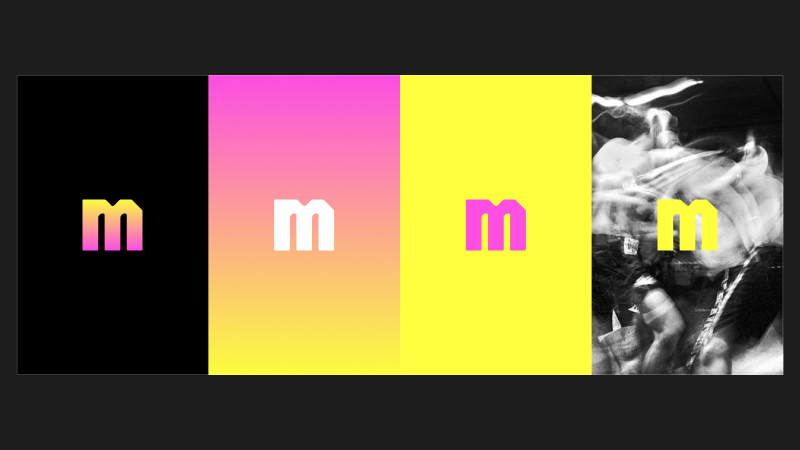
The visual identity begins with a simple idea. A single foundational building block.
The Moxie symbol is constructed using a geometric framework that emphasizes consistency, structure, and scalability.
Rather than behaving like a decorative mark, it behaves like a system component — something that feels engineered rather than illustrated.
This deliberate restraint gave the identity a sense of permanence while creating a flexible foundation for future expansion.
At smaller sizes, it remains recognizable. At larger scales, it becomes an anchor for the broader visual language.
A platform brand requires more than a logo. It requires a system capable of growing with the ecosystem it supports.
Designing Energy
Most infrastructure brands rely on familiar visual cues.
Blue.
Teal.
Muted gradients.
Corporate predictability.
We intentionally moved in the opposite direction.
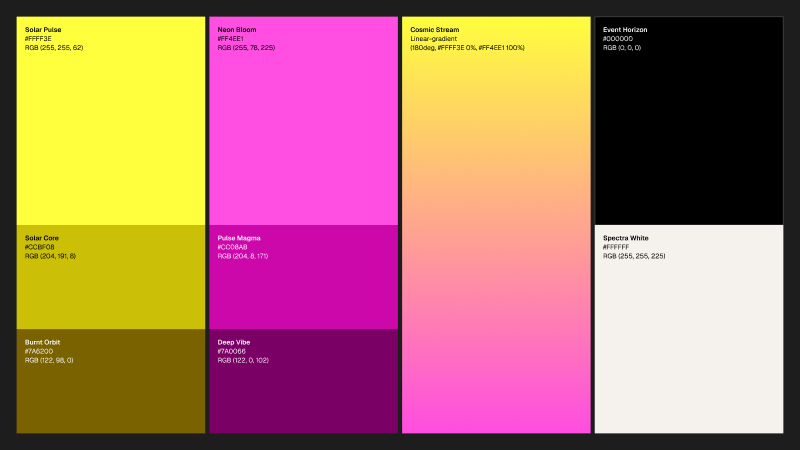
The Moxie color system was inspired by what we called 'The Energy of Creation'.
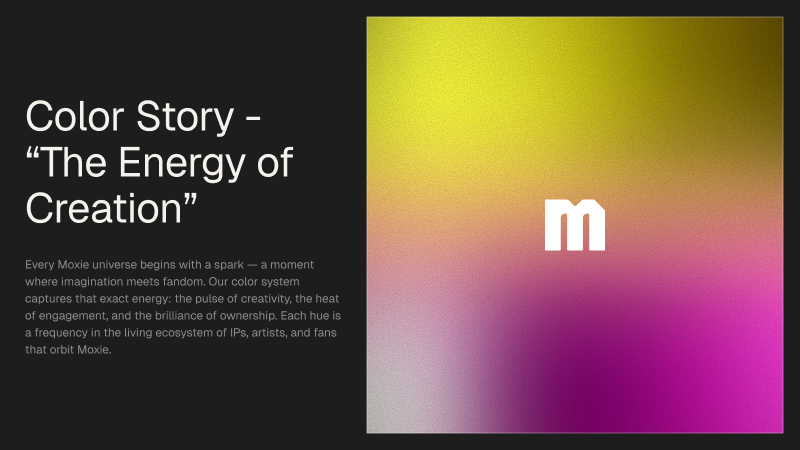
Every community begins with a spark.
An artist creating a song.
A gamer building a reputation.
A fighter earning a following.
A creator building an audience.
Those moments carry energy. The palette was designed to capture that feeling.
Vibrant yellows represent ignition. Electric pinks represent participation and cultural momentum.
The gradient system represents movement between creation and engagement.
Together, these colors create a visual language that feels alive, optimistic, and unmistakably different from traditional financial or technology brands.
Because Moxie wasn't building financial infrastructure. It was building infrastructure for human enthusiasm.
Creating A Flexible System
One of the most interesting challenges was designing a brand capable of existing across entirely different categories.
Sports.
Music.
Gaming.
Live events.
Creator communities.
Each audience carries its own visual language, expectations, and cultural references.
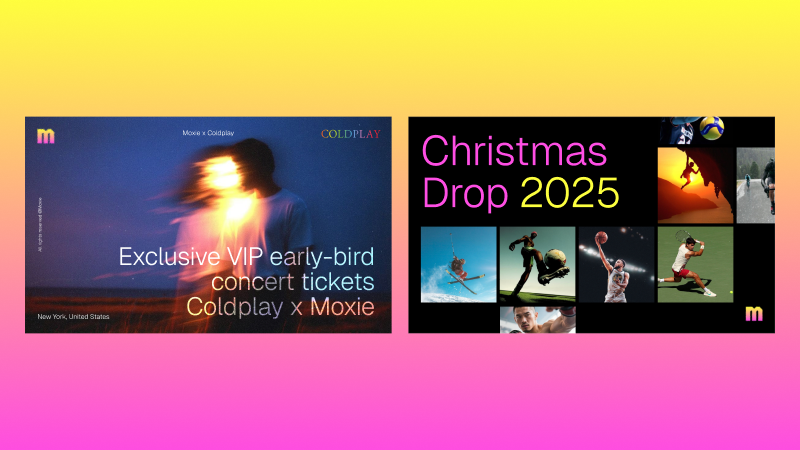
Rather than creating rigid brand rules, we designed a framework.
The core identity remains constant. The surrounding experience adapts.
This allows Moxie to feel equally at home inside a gaming platform, a loyalty ecosystem, a live event experience, or a creator marketplace.
The system scales without losing recognition. And perhaps more importantly, it scales without losing personality.
Bringing The Vision To Life
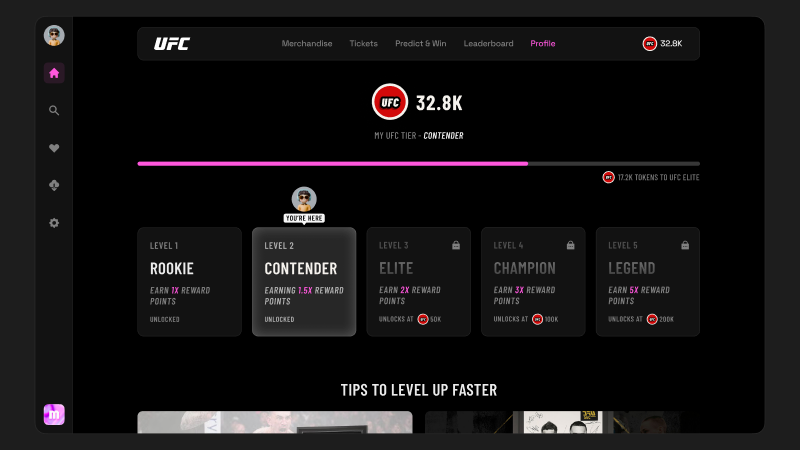
To test the flexibility of the system, we explored how Moxie could power entirely different fan experiences.
A UFC loyalty platform where participation unlocks status and rewards.
Gaming ecosystems where players own more than their achievements.
Exclusive event access that transforms fans from spectators into stakeholders.
Prediction experiences that reward insight and engagement.
These explorations helped move the brand beyond theory.
They demonstrated how the visual system could support real-world experiences across multiple industries while maintaining a consistent identity.
The result feels less like a standalone product and more like a platform capable of powering countless future experiences.
The Outcome
Moxie became more than a brand identity.
It became a framework for imagining a different relationship between audiences and the things they care about.
A relationship where fandom is no longer passive. Where participation creates value. Where communities become ecosystems.
And where ownership feels less like finance and more like belonging.
The final identity balances the precision of infrastructure with the energy of culture, creating a brand capable of speaking to both developers and dreamers.
Because the future of fandom won't be built solely through technology. It will be built through the experiences technology makes possible.
And Moxie exists to power those experiences.


